

[Marathon #279 / Unique Marathon #171 / 22 March 2025]
As long as Limpopo continues to pump out the marathons, I’ll continue to keep heading north. Since it appeared on the running calendar in 2023, the Makoro Village Marathon has been on my radar and this year Julian and I travelled to Polokwane for the third running of the event.

The marathon is themed around Limpopo village lifestyle fusing traditional food, drinks and dance into the event and we were told to expect plenty of support from the local schoolkids who would be entertaining runners at various points along the route. The race is organised by Polokwane Athletic Club but is very different from the other races in their portfolio, all of which are ‘urban’ and centred around the city. This one is about an hour’s drive outside Polokwane City and provides an excellent opportunity to do some feral marathon running.

The Polokwane Athletic Club clubhouse is in the old Peter Mokaba Stadium which is next to the new Peter Mokaba Stadium that was built for the 2010 Football World Cup. There was already a buzz around the stadium as Bafana Bafana would be playing Lesotho in a World Cup qualifier in the new stadium later that evening. Julian and I collected our race packs (which included a shirt, Powerade and a loin cloth).

I had a quick chat with some of the club members who were busy putting the final preparations in place for tomorrow’s race. I also managed to confirm the exact location of the start with Polokwane AC secretary Moloko. With that we had everything we needed and were on our way.

Moloko’s directions were good and we arrived without incident for the 6am start.
The race gets going with a gentle climb for the first kilometre before flattening out until the 5km mark when there’s a longer and steeper climb of about a mile. You are then rewarded with over 3 kilometres of gentle downhill. However, with the first section of the route being out-and-back, your enjoyment of this downhill is tempered with the knowledge that you are buying these kilometres on credit and will be paying everything back a short while later.

The turnaround point comes at 11.5km (after another short, sharp climb) with the main challenge on the return journey being slogging back up the no longer so pleasant hill you recently enjoyed running down.

Along this first stretch, many of the water tables were coordinated by other local running clubs. I am always interested in the names and origin stories. Most people think that the Zero-One-Five Running Club is named after Polokwane’s telephone dialling code. This is not true. They are so named because 1.5m is the maximum height limit to ensure that you can fit under their gazebo.

Whilst on the topic of little known facts, few people know the origin story of the host club’s distinctive yellow and blue kit. I understand that this building and those steel drums were the inspiration behind Polokwane Athletic Club’s running kit design.

I was also interested to see that in the time between heading out and coming back, some of the local commercial enterprises had opened for the day. One of which was a homebrew stand on the side of the road and I stopped to ask if drinking this high octane fuel would make me go faster. The concoction is a beer called ‘selala’ which is made from fermented marula fruit. I am not sure exactly what time this stall opened or how much Marula Magic there was at the start of the day but, judging by the spirits of patrons, quite a bit appeared to have been consumed by the time I arrived.
Another product that you are likely to find at these roadside bottlestores is a natural Viagra serum but it was either in the brewing process or they had sold out the previous day in anticipation of the weekend as none was available.

The friendly proprietors of this roadside stall insisted I pose for a photo so I got distracted and forgot to ask how much it costs per litre* and whether they offer a ‘lekgowa discount.’ Actually I couldn’t ask for a lekgowa discount since this word was not yet in my vocabulary and I would have to wait until later in the race when we ran past the Massive Tavern (it was not actually that big but that’s what the sign said) for my Sepedi language lesson.
* I subsequently found out that a bottle will set you back around R30. As a comparison, a litre of Amarula costs R220.
My Sepedi teacher was Mabore Langa and the lesson was inspired by the patrons outside the Massive Tavern who excitedly started pointing at me and shouted something unintelligible to my Anglo-Saxon ears as we ran past. Mabore asked if I knew what ‘lekgowa’ meant and when I said I had no clue, she informed me that it’s slang for a white person. I was pleased to provide a novelty factor for the hard drinking patrons of the kasi and this has now become my new favourite word.
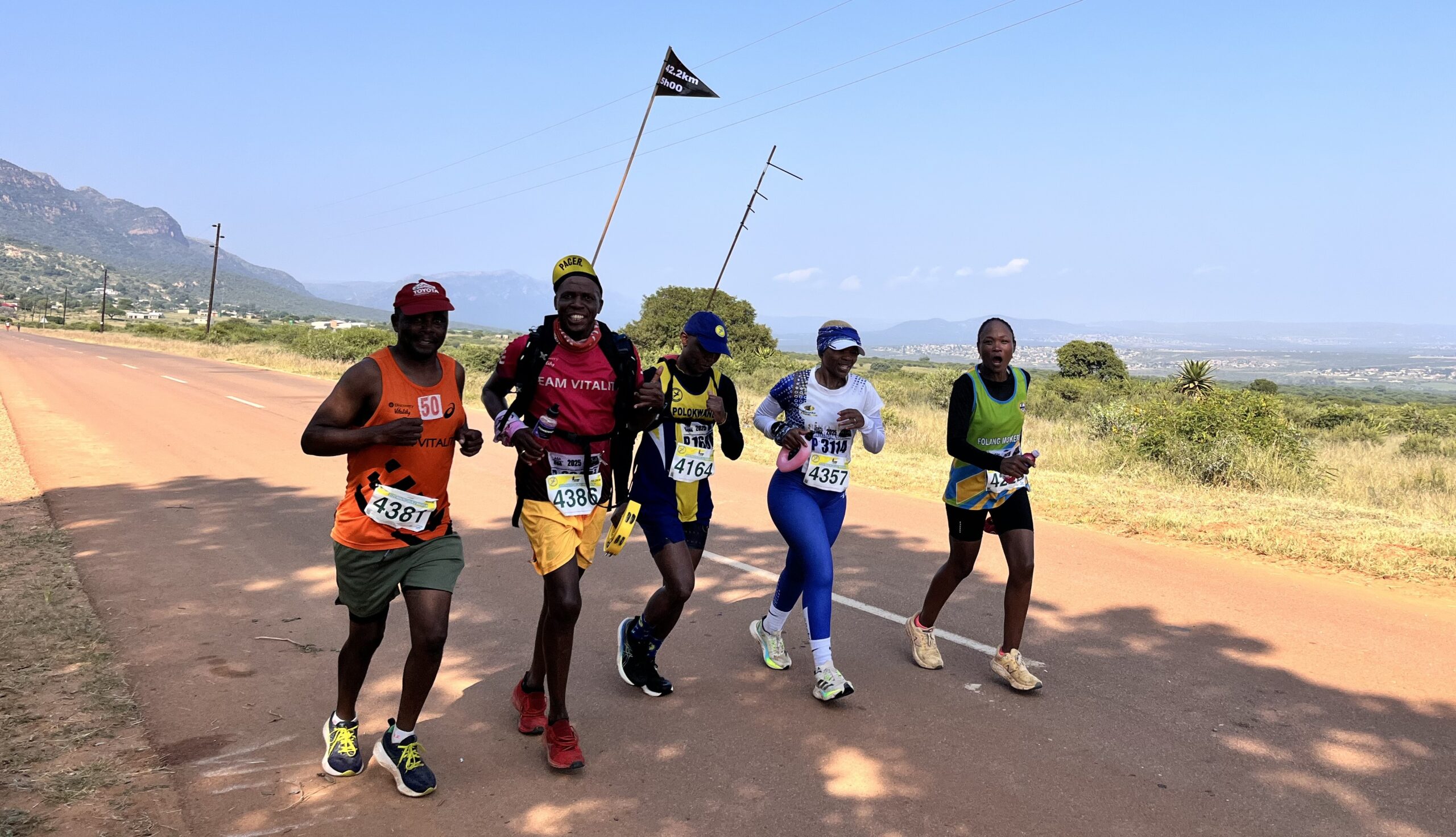
I did ChatGPT the term before bringing it into common usage and this is what the robots have to say, “The term originally referred to Europeans or white settlers during colonial times. Over time, ‘Lekgowa’ became the general word used to describe a white person. It’s not necessarily derogatory — it depends entirely on the tone and context in which it’s used. It can be neutral, descriptive, or even respectful in normal conversation.” I am sure that our early morning revellers were using it in the respectful context.
I find the word incredibly versatile, for example you can ask for a ‘lekgowa discount’ in most settings; if someone offends, condescends or excludes you an appropriate question is, ‘is it because I’m a lekgowa?’ and when I recently received “Super white” maize meal in the Lemo Mall Marathon race pack I could ask ‘was this just given to the lekgowas?’

Back to the route… A couple of kilometres before you get back to the starting point, you are diverted right and the rest of the marathon is a big loop around rural Limpopo.
Your loop begins with a gentle downhill that turns into a steep decline to the 25km mark. However, most Makoro runners’ steep decline began with the even steeper incline after 25km. Here the tar changes to bumpy dirt road and you reach the lowest point on the route and the dry Mphogodiba riverbed.
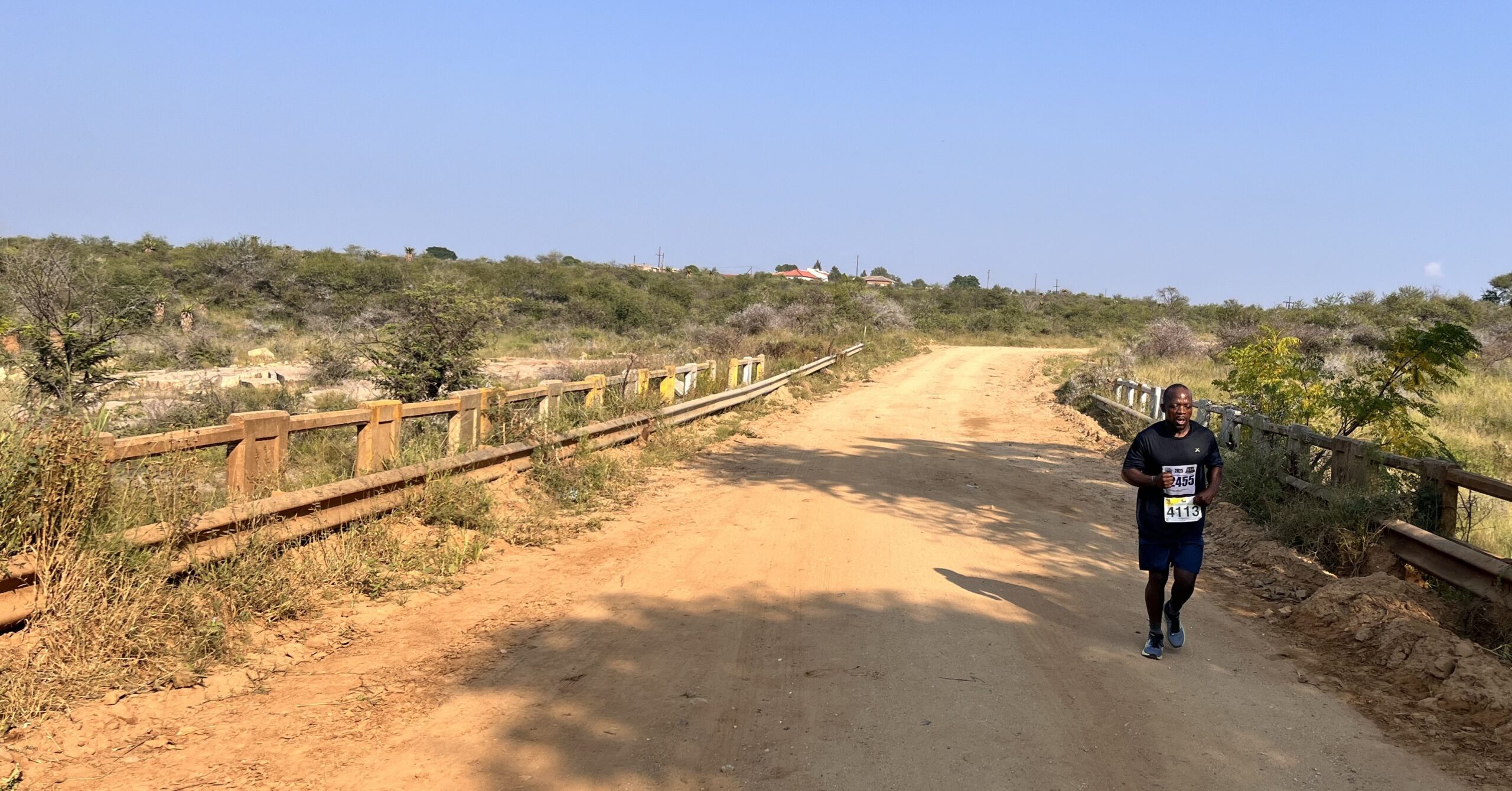
According to my amateur Sepedi translations, Mphogodiba translates as “the gift that removes” and this stretch of dusty road certainly sucked the stamina right out of most runners. The rough ride over this rutted road was intensified by the rising temperatures and was further aggravated by the toughest climb of the day – just over 3km of steady hill to the highest point on the route.

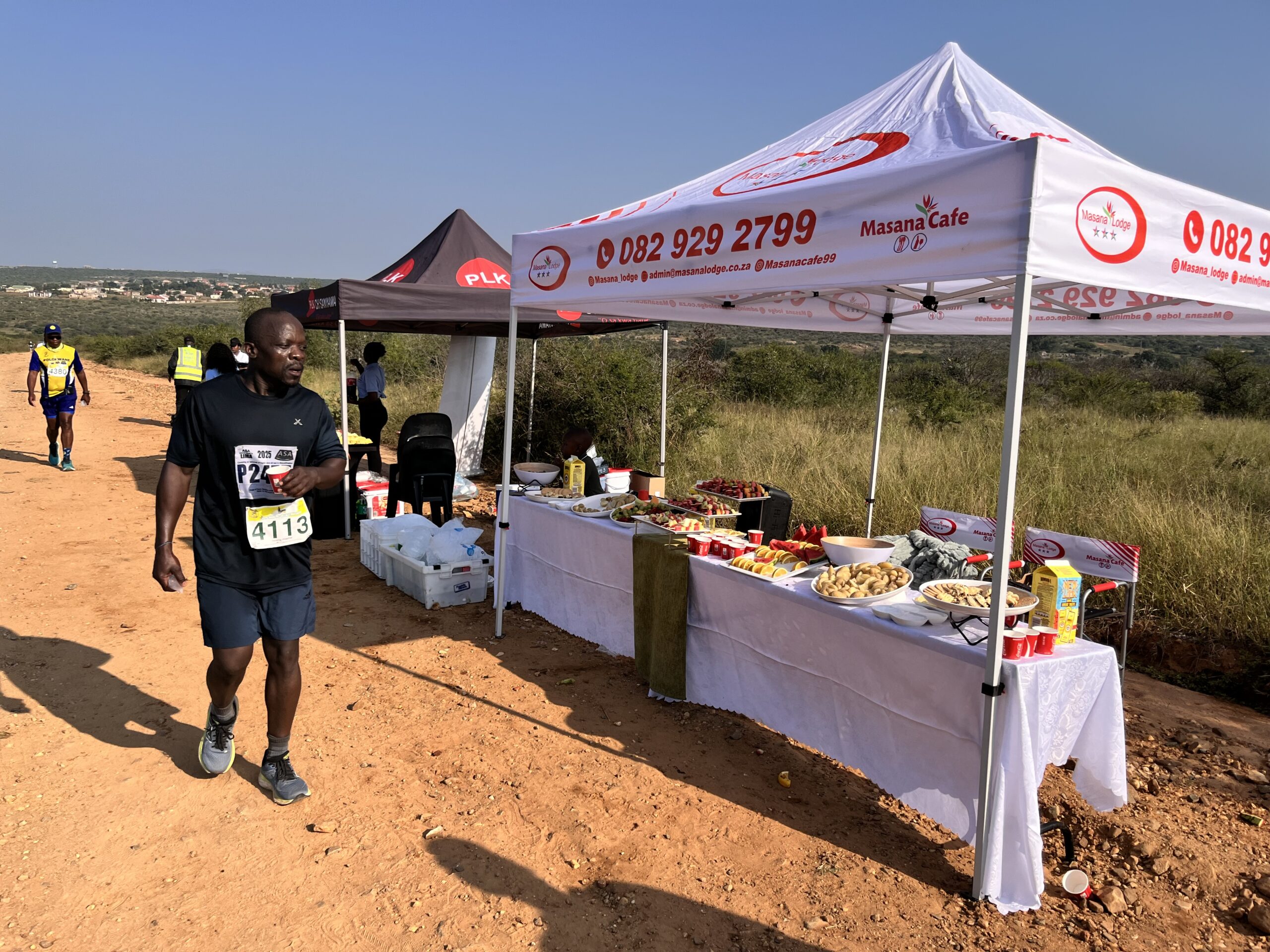
The good news is that the best stocked table of the day was just around the corner and I can confirm that their fruit kebabs were both visually appealing and beautifully refreshing. All the tables were great but the good people from Masana Café really outdid themselves.
From 30km it’s back onto the tar and then it’s rolling hills all the way back to the finish at the Molepa Dam. Much of this is run through the local villages where there is always plenty to see and many curious onlookers to provide some support to the marathon runners.
Whilst Julian is the undisputed G.O.A.T. of recreational running, I was more interested in some actual goats who lined up in a similar formation to John, Paul, Ringo and George for their iconic Abbey Road album. I couldn’t quite capture the regular goats on the zebra crossing in the photo below but if they released an album I imagine it would be called “Abattoir Road” with their sound being a fusion of ‘bleat boxing’ and ‘baa-roque’ music.

You get some great views of the Molepo Dam over the final few kilometres but I was getting thirsty and got distracted by a liquor store offering “Beaverages”. As we’ve established, I finished the marathon with a much larger Sepedi vocabulary than when I started but I am still waiting for a Limpopian to explain this term. In the absence of a suitable explanation forthcoming, I would assume that Hunters Dry would be the worst possible outcome if you were chasing a Beaverage.

Over 30 villages make up the town of Ga-Molepo – and you run through a good proportion of these during the Makoro Village Marathon. Molepo means ‘a place or a moment of relaxation’ and I had plenty of time to relax whilst waiting for Julian to complete marathon #994.

I also still had enough breath left after the hills at the end to do a quick interview with BK from EnergyFM who was broadcasting live from the event. Having been a frequent guest on his sports show talking about controversial topics, it was nice to provide a positive reflection and enthuse on another fantastic and uniquely South African marathon. This lekgowa had a great time at the Makoro Village Marathon and will definitely be back.


Looks like the sort of run for people who like a different type of marathon. Looks like a well organised and enjoyable experience.
I enjoyed reading your story, and hope you will be able to go back again.