
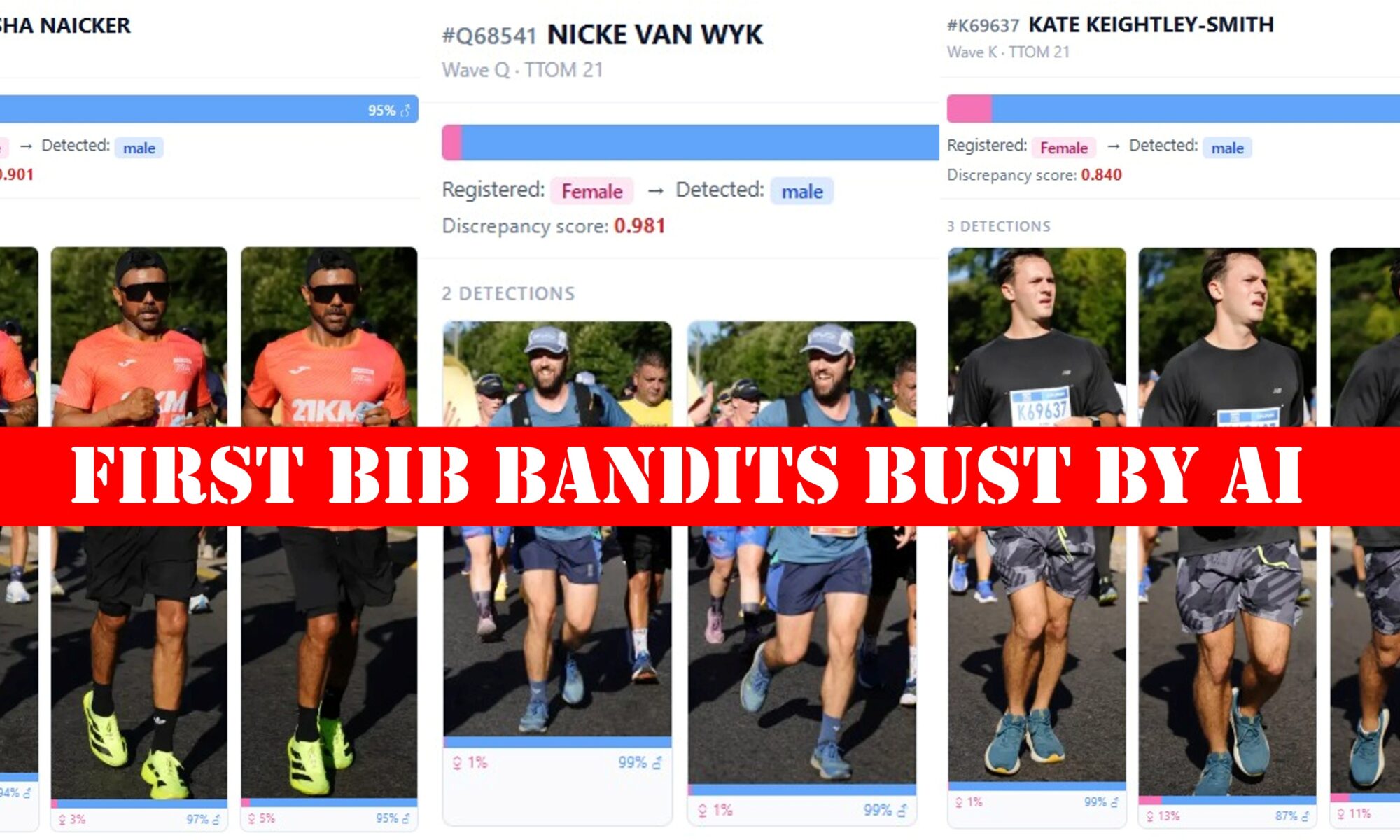
This currently unidentified man running in Nicke van Wyk’s 2026 Two Oceans half marathon race number is officially the first person to be bust by AI for bib banditting. I have contacted van Wyk to let her know about her ‘world first’ but have not received a response at the time of writing. I would of course like to get the name of the man who is running in her number as well.
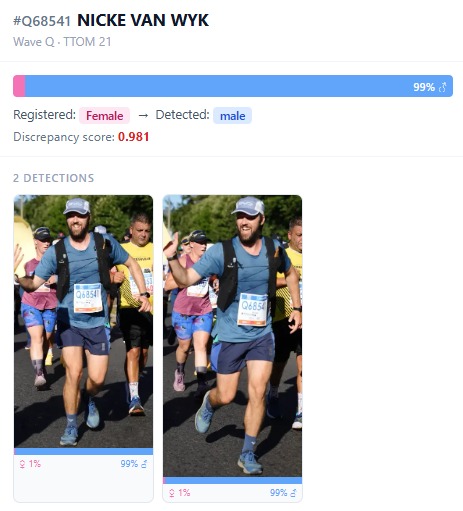
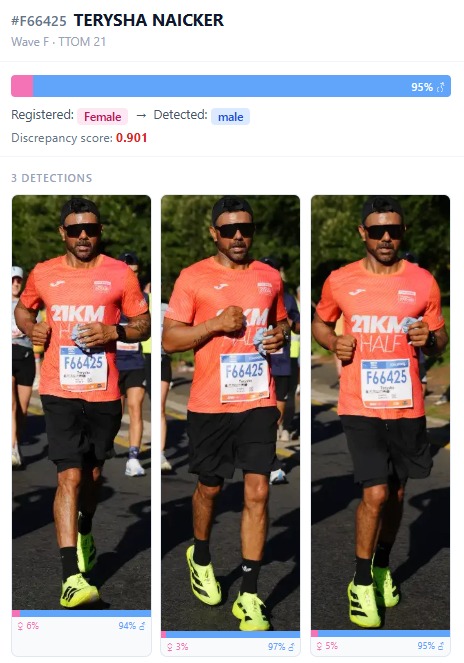
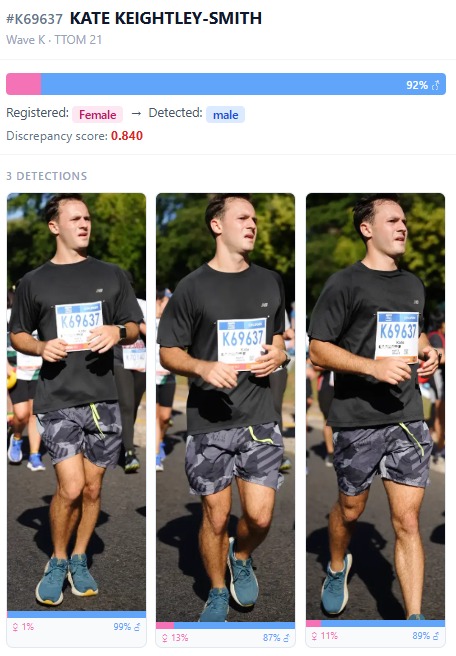
Nicke van Wyk narrowly beat out Terysha Naiker and Kate Keightley-Smith for the honour. However, van Wyk’s bandit can be proud that he was not only the first but also the most masculine bandit on the podium with a 99% gender swap probability compared to 95% for Naicker’s and 92% for Kate Keightley-Smith’s bandits.
As a point of comparison, two of the original Braless Brahs, Luke Jacobs and Morgan Newman, both scored 99% probabilities. This will no doubt result in a braless chest bump of delight the next time they run together.


READ MORE: Two Oceans 2026: Two Top 10 “Ladies” Disqualified as Topless Photos Emerge Online
READ MORE: Good Hope DJ & former Stormer is latest BrahGate Bandit
The AI tool was built as a proof of concept by Francois Botha. Francois started running in 2019 when his wife fell pregnant, “Everybody warned me that my life would be over once children arrive and I wanted to complete at least one marathon before then. Contrary to expectations my life didn’t end after all and I continued running. 4 Two Oceans, 2 Comrades (11:47 down, 9:58 up – yay, hill sprints!) and I guess about 20 marathons in total.”
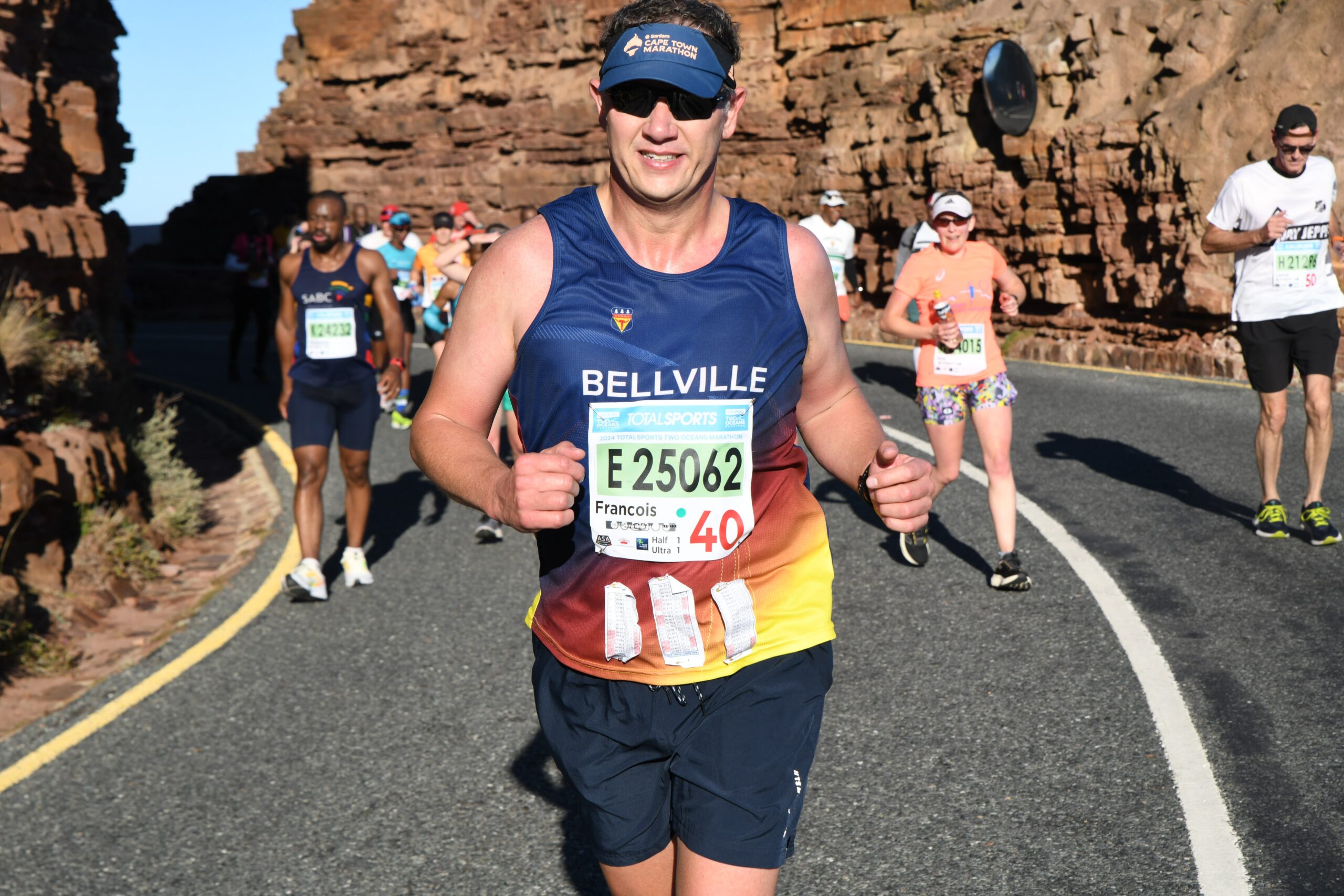
Francois has helped me out with some technical support and race result scraping in the past. After the Brahgate story broke, Francois chimed in with one of his “regular facetious comments that with enough photos and computing power, AI should be able to catch these people.” The following day he WhatsApped me some screenshots of “something he was playing around with” and said he “had an itch to scratch”.
The terrible Cape Town weather after this year’s Two Oceans (where Francois scraped home with a perfectly paced 6h57) also helped, “AI, for all its faults, is very good at processing large amounts of data quickly and this was the perfect problem. Then two rainy long weekends arrived. I realised I had my hammer ready and now I’d found my nail, so I got to the hammering part.”
By day, Francois is a Quantitative Finance Developer for one of South Africa’s large insurers. He provides the succinct job description that, “This basically means I write number crunching software.” Francois further explains, “Lately AI has become a big focus and the pressure is on our entire team to upskill ourselves. Therefore I look around for problems that could possibly be solved with an AI approach.” And with AI and bib banditting both being hot topics these days, I guess you could say that Francois found the perfect use case.

I asked Francois to explain in layperson’s terms how he approached this challenge, “I didn’t solve this all from scratch. I stood on the shoulders of giants and used pre-trained models (mostly found on HuggingFace), so this was a case of assembling the best building blocks. The goal was to identify runners that entered as male but looked female in the race photos and vice versa.”
After downloading as many race photos as he could, an object detection model was used to process each photo and separate each runner in the photo. Once each runner is isolated, two subsequent models are used to detect the race number and apply a gender classifier (which assigns a likely gender with a level of confidence).
There were however some challenges, “Some guys with impressive beards were classified as females. Running in Team Vitality pink didn’t seem to help!” This is a false positive which highlights the risk of inherent bias within AI models. Another initial challenge was that if a race number was partially obscured the tool thought it was a shorter race number resulting in some false positives with some Blue Numbers incorrectly being flagged (those with 10 or more finishes who have lower race numbers with fewer digits).
The tool was continually refined and improved “Through the noise, I was able to correlate the race entries’ gender (via detected race numbers) to the assumed gender. There were quite a few obvious cheaters and Running Mann had already caught some of them. There were also some obvious data glitches in the entries. But eventually the scale of the bib banditing problem became obvious and many genuine bib bandits were identified (both men and ladies, for what it’s worth).”
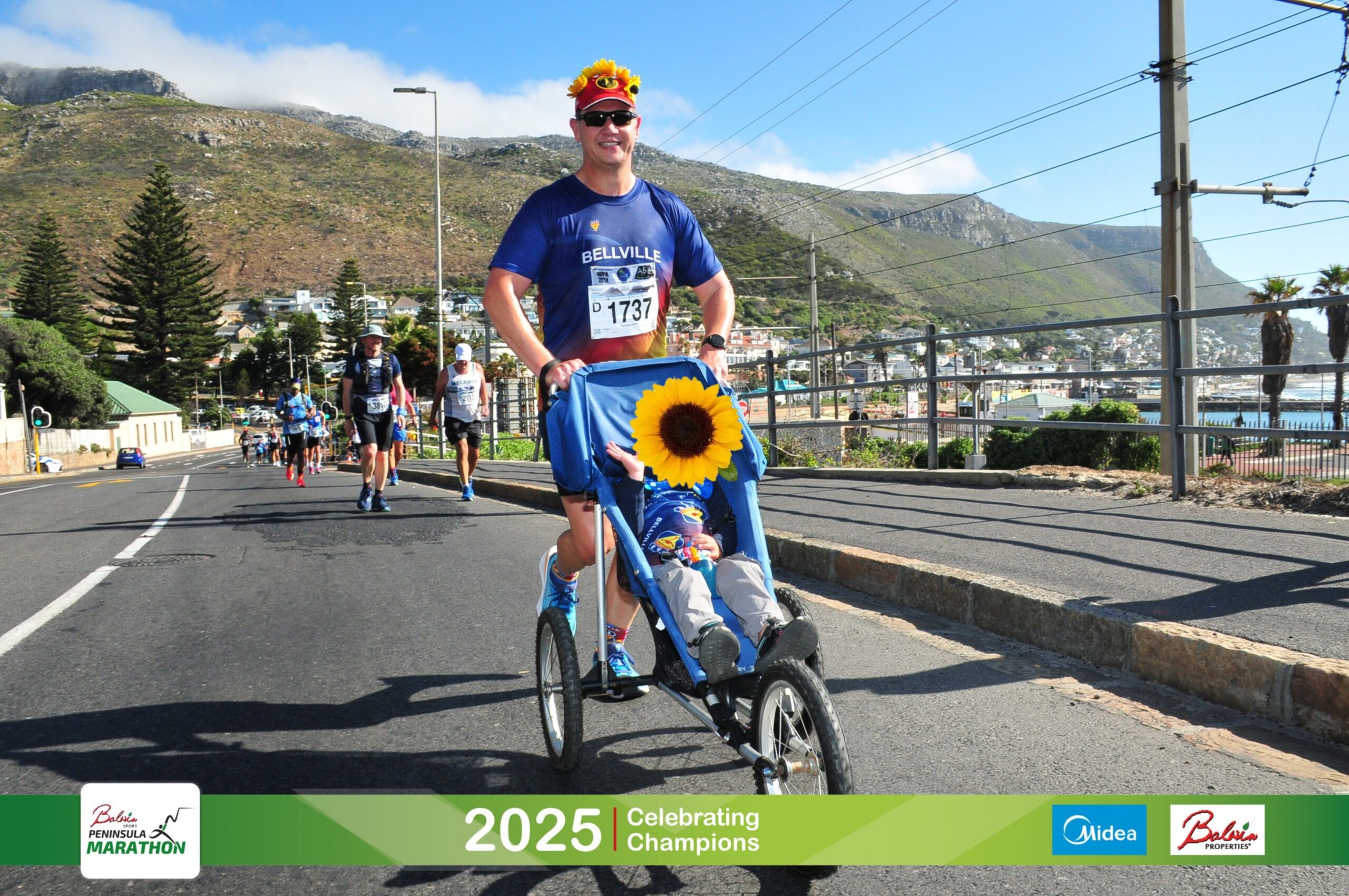
As for what’s next I’ve thrown a few more challenges Francois’ way. First up he’s looking at an age classifier to pick up baby-faced 60-year-olds and wrinkly teenagers. I’ve also created a backlog for other types of cheating and devious behaviour that I’ve observed. This includes two people running in the same number, runners using their ultra race bib in the half marathon, runners who’ve removed the timing chip from their number, those who’ve removed or covered the name on the bib and runners who are suspiciously covering or obscuring their race number.
However, Francois does want to point out, “My goal isn’t to be Big Brother or a policeman. If I didn’t do it first, someone else would. I wanted to scratch my own technical itch while highlighting that the technology exists to catch dishonest runners. Hopefully this alone will serve as a sufficient deterrent for future wanna-be bib bandits.”
Cheaters be warned, there’s a new code-slinging sheriff in town – and he’s just getting started!
Follow Running Mann:


Love this! Welgedaan, Francois!!
Love this, maybe need to link Francois up with Smac pix , Peak timing etc.
Well done Francois !
Very nice and impressive.
Now is there any it guru with an itch… that can create a digital option to do legal substitutions untill close to kickoff by phone and collect a printed legal number at a kiosk? Lets fix the cause as well.
I believe they need to overhaul their entire backend admin platform first. It’s a dinosaur built on obsolete tech which inhibits enhancements. Get that right and the nice-to-haves will flow easily.
Can we get an idea oh how many people this AI model has caught? I am sure they must be a lot. Scary part is this only catches the people running as the opposite gender. Safe to say they are probably as many, if not MORE bandits of the same gender running in someone else’s bib
I think I stopped at about 20. By then the point was proved and there’s unfortunately still many false positives between the actual cheaters. Would like to spend some time cleaning it up first. For example, apparently it is beneficial to deskew the race number images first before trying to convert the image to a parsed number (OCR).
If someone has the time, energy, and effort, maybe a model which compares this years bandits to previous years’ race photos? Chances are we’ll see repeat offenders / find out the actual name of these individuals. Francois?